
Pickthall House commends the new Home Secretary, the Right Honourable Shabana Mahmood MP, on her approach to immigration and pluralism in Britain, as a pragmatic and authentic example of British values. Pickthall House believes that any genuinely robust liberal democracy should be able to incorporate people of all ethnic, faith and socio-economic backgrounds. Furthermore, it stands to reason that the sensible management of immigration and prevention of illegal arrivals is a prerequisite for any betterment of the situation of Britons, majority and minority, born citizens and legal migrants alike. For this reason, Pickthall House considers Mahmood’s firm but clear approach to immigration and a pluralistic British identity a model for the Labour government and the wider national discourse.
This week at the Labour Party Conference in Liverpool, Mahmood has drawn on her heritage as a Muslim second‑generation immigrant to warn of the distortion of patriotism into ethno‑nationalism, while urging understanding of why many feel the country is failing them. She has pledged tougher action on ‘small boat’ crossings, people‑smuggling, illegal working, and crime, alongside ending asylum hotels and consulting on extending the qualifying period for Indefinite Leave to Remain from five to ten years with stricter conditions. With this, she has also reassured British Muslims that unity and resilience against extremism remain central to her vision of a “greater Britain, not a littler England.”
“I know we are a stronger and more united country when we tackle those who seek to destroy our way of life, no matter who they be… Our challenge now is to fight for our vision of this country and, in doing so, to hold it together.”
Shabana Mahmood
On 29 September, at the Labour Party Conference, Shabana Mahmood delivered her first major public address as Home Secretary since replacing Yvette Cooper, MP for Pontefract, Castleford and Knottingley, at the start of the month. Born in Birmingham in 1980, and serving as Labour MP for Birmingham Ladywood since 2010, Mahmood is the first British Pakistani and Muslim to serve in the role, previously also serving as the first Muslim and British Pakistani to hold the position of Lord Chancellor. This is despite Muslims making up 6% of Britain’s population as of 2021 and constituting the nation’s largest religious minority.
Before her political career, Mahmood read Law at Lincoln College, Oxford, graduating in 2002 before being called to the bar. Her seat, Birmingham Ladywood, is one of the most ethnically diverse constituencies in the country, with British Asians making up 41% (including 23% British Pakistani), followed by 24% British Black African or Caribbean, and 22% White (including 16% White British). As a deprived inner-city seat, it reportedly contains the highest number of people claiming universal credit or jobseekers allowance in the country, as of September 2023. When elected in 2010, Mahmood jointly became the first female Muslim MP in British history, alongside Yasmin Qureshi, MP for Bolton South and Walkden, and Rushanara Ali, MP for Bethnal Green and Stepney.
“Patriotism, a force for good, is turning into something smaller… something more like ethno-nationalism, which struggles to accept that someone who looks like me, and has a faith like mine, can truly be English or British.”
Rise of Reform and the Far Right
Therefore, Mahmood’s appointment as Home Secretary is particularly salient as anti-Muslim and anti-immigration rhetoric continues to rise in the UK, alongside Reform UK, a party whose leader, Nigel Farage, MP for Clacton, in May 2024 controversially accused a growing number of British Muslims of 'not subscrib[ing] to British values'. Pickthall House has previously responded to these comments in its article “On the appropriation of ‘British Values’”.
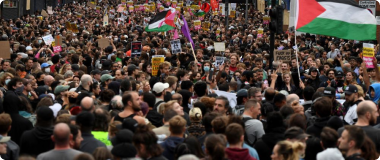
Reform UK also announced last week its plans to scrap all routes to Indefinite Leave to Remain (ILR) for immigrants to Britain, as it continues to top opinion polls since snatching Labour’s post-election lead in March of this year. Meanwhile, both this summer and last summer have seen widespread anti-immigration and far-right protests target mosques, Muslim graveyards, community centres, and hotels housing asylum seekers, culminating in two ‘Unite the Kingdom’ rallies in central London, in October 2024 and September 2025, led by EDL-founder, Stephen Yaxley-Lennon, also known by his hooligan moniker, Tommy Robinson, which drew thousands of attendees.
Figures such as Tommy Robinson, alongside ex-Reform politicians, Rupert Lowe, MP for Great Yarmouth, and Ben Habib, former co-deputy leader of Reform UK, himself also a British Pakistani, have now emerged as the leaders of Britain’s extreme right. Despite Nigel Farage’s purges of the outspoken far right of the party and his refusal to associate with Robinson, these factions are organising. On 30 June 2025, both Lowe and Habib launched new political vehicles: Lowe’s political organisation “Restore Britain” which supports deportation of illegal immigrants and defends and promotes ‘Christian values’ and British culture, and Habib’s party, Advance UK, which has reportedly welcomed Robinson into its fold.
"My parents weren’t steeped in Magna Carta, Habeas Corpus and the Bill of Rights – as I would one day be – but they did have a strong sense, arriving here in the UK from rural Kashmir, that this country was different: that there are rules, some written and some not, that we abide by."
Mahmood’s previous public addresses
In Mahmood’s swearing-in speech as Lord Chancellor on 15 July 2024, she highlighted her working-class upbringing as the child of Urdu-speaking Kashmiri immigrant parents in Birmingham, her commitment to international rule of law and human rights, and her hope that her appointment would inspire other women like her to pursue high office. In particular, Mahmood stressed rule of law as “the most enduring of British values” and the nation’s belief in due process, not mob rule, and hit back at the infamous Daily Mail 2016 headline which branded three High Court judges “Enemies of the People”.
As Lord Chancellor, Mahmood addressed salient topics in Parliament including the prison capacity crisis, Independent Review of Sentencing, and the ‘grooming gangs’ scandal, as well as giving a notable address at the Council of Europe in June of this year in which she reaffirmed the UK’s commitment to the European Convention on Human Rights (ECHR). In March, Pickthall House noted with enthusiasm Mahmood’s plans to introduce a bill to the Commons which would overrule sentencing guidelines that could lead to different treatment of criminals based on protected characteristics of age, gender and ethnicity.
In her first month as Home Secretary, Mahmood has again spoken on ‘grooming gangs’, affirming the Government’s decision to proceed with a national inquiry based on the Casey recommendations, the Human Rights Act 1998 as it relates to immigration, neighbourhood policing, Channel crossings, and indeed the ‘Unite the Kingdom’ rally of 13 September.
Speaking on the rally, Mahmood asserted her support for the “ancient right to peaceful protest” but highlighted the 26 police officers injured and 24 arrests made, emphasising, as the Government had following last summer’s disturbances, that “those violent thugs will face the full force of the law.” Mahmood also called out the appearance of Elon Musk at the rally, “when a foreign billionaire calls on our citizens to fight against our ancient democracy,” and instead affirmed the UK to be a “diverse” and “tolerant” nation, that Englishness is open to all ethnicities, and that the Union Jack and St. George’s Cross “must never be used to divide us.”
“We will have to question some of the assumptions and legal constraints that have lasted a generation and more… unless we have control of our borders, and until we can decide who comes in and who must leave, we will never be the open, tolerant and generous country that I know we all believe in.”
Immigration policy under Labour
Prior to winning the 2024 election, Labour’s manifesto promised a skills-first approach, linking immigration to workforce plans, training and productivity, with migration to complement the domestic capacity for labour, rather than substituting for it. Reforms to the Home Office were also promised, along with a new Border Security Command and faster decisions on asylum processing and deportations to disrupt criminal smuggling and the ‘small boats’ crisis. Other commitments included more humane accommodation standards and tougher action on employers who exploit sponsorship routes and exploit migrant workers.
Since the Labour party’s landslide victory in July last year, we have seen early steps towards the establishment of Border Security Command and measurable casework standards. There has been a greater focus on returns and deportations, with Yvette Cooper MP announcing the ‘Deport Now, Appeal Later’ scheme in August this year. Other reforms have included ongoing reviews of fee structures, processing times and sponsorship rules, with an aim for predictability, fairness, and fiscal discipline. Nevertheless, as Reform UK continues to lead in the polls with increasingly radical calls for change, the Labour party has appeared driven to accelerate its efforts in addressing the migrant crisis to stem its dwindling working-class support.
“When people see small boats arriving on our shores, they see a country that has lost control. When they hear of widespread illegal working, under-cutting British workers, they feel the system is rigged, and when they see crime unchecked on unsafe streets, they feel fearful.”
Labour Party Conference
Therefore, while the Home Secretary’s speech this week continued previous themes, it had a renewed focus on immigration. At this year’s Labour Party Conference, Mahmood again addressed her heritage as a second-generation immigrant and called out the racist slogans of some protestors as well as Robinson’s criminal record. Rather than dismiss these as fringe elements, however, Mahmood rightly identified that “patriotism, a force for good, is turning into something smaller… something more like ethno-nationalism, which struggles to accept that someone who looks like me, and has a faith like mine, can truly be English or British.” Nevertheless, she was firm in her belief that such a development can be undone, if only by understanding “why so many people feel this country is not working for them.”
In particular, Mahmood highlighted the effects of ‘small boat’ arrivals, “illegal working under-cutting British workers” and “crime unchecked on unsafe streets”. She correctly identified that in failing to address this, first the Conservatives and now Labour was losing its working-class base to Reform UK. Heralding a “fight for our belief in a greater Britain, not a littler England”, she directly addressed people smugglers and those considering crossing the Channel, promising a greater crackdown on human traffickers, illegal migrants, an end to the asylum hotel system and increased rates of deportation.
Notably, given her previous support for the rule of law and ECHR, Mahmood stated: “We will have to question some of the assumptions and legal constraints that have lasted a generation and more”, adding “unless we have control of our borders, and until we can decide who comes in and who must leave, we will never be the open, tolerant and generous country that I know we all believe in.”
Next, Mahmood highlighted the arrival of 2.6 million people following Brexit up until 2024, increasingly termed the “Boriswave” and the abuse of the health and social care visa. Following only a week after Reform UK’s shock announcement of its plans to abolish ILR, she then announced the Government’s plans to consult on increasing the time required living in the UK to earn ILR from five years to ten years, with conditions including employment, making National Insurance contributions, not taking benefits, a high standard of English, absence of a criminal record and volunteering in one’s local community.
In addition, Mahmood promised an increase of 3000 neighbourhood policing officers by 2026 and a crackdown on shoplifting and anti-social behaviour, calling upon her childhood experience working in her parents’ cornershop. Lastly, she concluded by openly acknowledging the insecurity and fear of reprisals felt by British Muslim communities following the terror attacks of 9/11 and 7/7, asserting that “I know we are a stronger and more united country when we tackle those who seek to destroy our way of life, no matter who they be… Our challenge now is to fight for our vision of this country and, in doing so, to hold it together.”
Conclusion
Pickthall House welcomes this firm position taken by the new Home Secretary against illegal immigration and the exploitation and abuse of the existing immigration system and processes, as well as of the people making these incredibly dangerous journeys themselves. If the concerns of ordinary British citizens and legal immigrants are to be adequately addressed and their living conditions improved, illegal migration must be handled sensibly and swiftly. Pickthall House shares the Home Secretary’s strong belief in and commitment to the rule of law, due process and the possibility of a greater, pluralist British identity, which should be the hallmark of any robust liberal democracy, and her concerns about the rise of a narrow, disorderly and violent ethnonationalist current in the country which threatens this. Pickthall House shall be closely monitoring and reporting on the promises made and actions taken by the Government in regards to immigration reform and hopes to see a vision such as Mahmood’s come to fruition, for the betterment of all Britons.