
British politics is fraying at the seams. The two-party system now finds itself stretched in opposing directions, driven by a voting class that is growing increasingly polarised. The predictable contest between Labour and the Conservatives is giving way to a more volatile landscape. Voter loyalties are eroding, new political movements are gaining ground, and the electoral system itself is coming under scrutiny. The sudden popularity of two new parties - the right-wing, populist Reform and the left-wing, socialist-leaning Corbyn-Sultana party - is not just a question of protest voting: they are shaping up to be a direct threat to the incumbents. Polling indicates that both main parties stand to lose significant ground.
The working class, once the backbone of Labour, is now politically homeless. Many working-class voters feel disillusioned by a Labour Party that seems more interested in culture wars than the cost of living or industrial decline, and by a Conservative Party captured by an outdated Thatcherite agenda and captured by lobbyists. The result is a split, with some gravitating towards Reform UK, drawn by its straightforward campaign on immigration; others find themselves drawn to what is becoming known as the Sultana-Corbyn axis, a populist left that rejects neoliberalism in favour of socialist-style wealth redistribution. Even the current independent MPs seem increasingly aligned with the Corbyn-Sultana party.
The Labour Party, in particular, is vulnerable. Starmer’s leadership has restored a degree of order and discipline relative to a fractious and imploding Tory party, but at the cost of isolating a large portion of Labour’s old base. These voters do not see themselves reflected in Labour’s top brass. It’s hard to believe promises of net-zero prosperity when their wages are stagnant, their towns are crumbling, and their children cannot afford housing.
Unlike the main parties, Reform UK prides itself on simplicity and recognition - a sense that someone, somewhere, is listening. The same applies to the left-populist grouping around Corbyn and Sultana, who frame the crisis not in nationalist terms but in class terms, pointing to rentier elites.
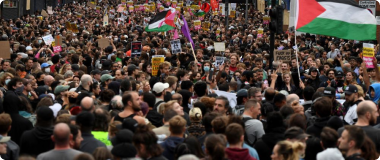
Most recently, Starmer’s policies on Israel and the rapidly unfolding humanitarian crisis in Gaza have further isolated key segments of Labour’s potential support base, particularly young people and British ethnic minorities. Alienated by Labour’s muddling, ambiguous stance, these voters have increasingly found purchase within the Corbyn-Sultana movement. This left-populist grouping offers a clear, principled voice on Palestine, combining international solidarity with a broader critique of global inequality.
In a first-past-the-post system, the prevailing wisdom has always been that upstart movements will burn hot and fast, splintering, though ultimately failing to break establishment structures. This looks less true every day.
While the system still favours the main parties, the vote share tells a different story. Labour and the Conservatives are already polling at historic lows, struggling to maintain a combined majority of public support. Tactical voting, long a grudging, patchwork solution, is wearing thin. Voters are tired of compromise and strategic calculation. They want to vote for parties that reflect their views, and don’t simply serve to stop the other side. Instead of tactical voting, this growing trend might better be described as revenge voting: a deliberate choice to break the grip of the two-party system rather than merely to block the opposition, to punish politicians they hold responsible for driving the country into decay.
The first-past-the-post system, therefore, looks increasingly unsustainable. As support for smaller parties grows, especially among the working class, the legitimacy of the electoral system comes under real pressure. When a significant portion of the electorate votes for a party that gains little or no representation, the cracks in the system become impossible to ignore. Alongside this, the new, smaller parties are challenging the idea that politics must be polite, centrist, and technocratic.
Labour and the Conservatives still have longstanding political infrastructure and machinery that the Reform and the Corbyn-Sultana party lack. And yet, the importance of social media campaigning, the dissatisfaction on the streets, and the shocking poll numbers indicate that their hegemony may be at an end.