
The Price of being Muslim in Western Politics: notes from Mamdani’s Campaign
Executive Summary
Zohran Mamdani’s election as New York City’s first Muslim mayor exposed the persistence and normalisation of anti-Muslim prejudice in Western politics. Despite running a campaign focused on affordability and working-class issues, Mamdani was subjected to sustained attacks on his religious identity from political opponents, media figures, and online networks, including insinuations of terrorism, calls for deportation, and dehumanising imagery that concerned none of the substantive issues he was campaigning on. His experience reflects a broader international pattern in which Muslim politicians are treated primarily as security threats rather than legitimate democratic actors.
The article situates Mamdani’s campaign within a wider Western context, documenting rising religious bigotry across Europe and the UK, where minority politicians of all political stripes, whether Muslim, Jewish, Hindu, or Sikh, face harassment, delegitimisation, and physical danger. These dynamics, the piece argues, undermine democratic norms, corrode social cohesion, and create conditions in which political violence becomes more likely.
While Mamdani’s victory shows that voters can reject prejudice when offered credible, material alternatives, we conclude that Western democracies must actively confront religious bigotry in all its forms in political discourse if equality, citizenship, and democratic legitimacy are to be meaningfully upheld.
More
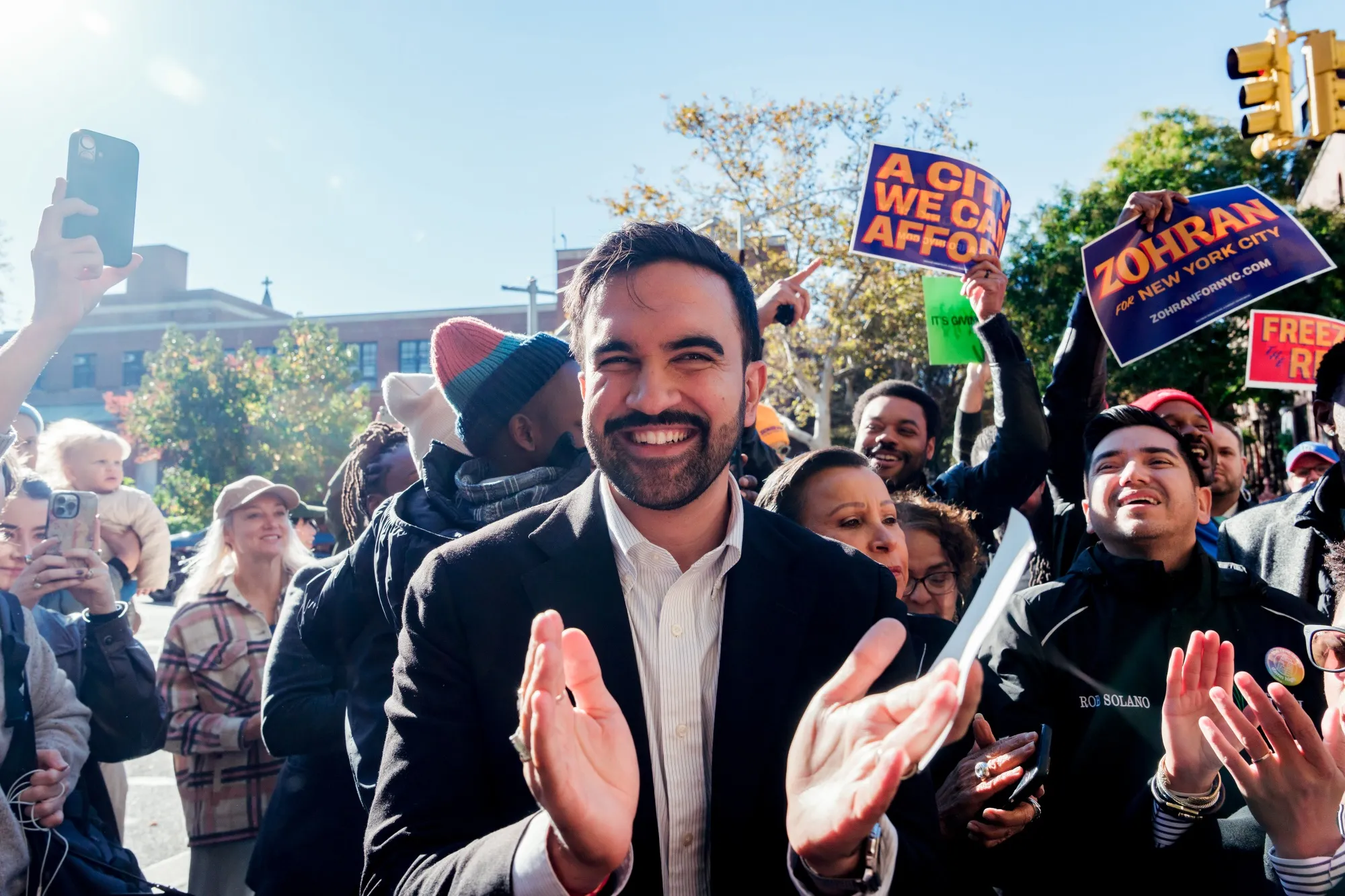
Zohran Mamdani’s victorious campaign for in the New York City mayoral election has brought to light a growing trend of hateful rhetoric directed towards Muslims in Western politics, including in the UK. Mamdani, a Ugandan-born Muslim immigrant to the United States, overcame significant odds to become the first Muslim mayor-elect of America’s largest city for the Democratic Party on 4th November 2025. His campaign, though vastly outspent by opponents backed by real estate interests and traditional Democratic power brokers, appears to have resonated with voters focused on affordability and working-class issues.
Mamdani’s historic victory was shadowed by a disturbing pattern of anti-Muslim prejudice throughout his campaign. The attacks began shortly after his primary victory and intensified as the general election approached. Andrew Cuomo appeared on conservative radio and made thinly veiled references to 9/11 when discussing Mamdani, asking: “God forbid, another 9/11, can you imagine Mamdani in the seat?” Republican members of Congress unleashed overtly Islamophobic rhetoric. Rep. Andy Ogles called Mamdani “an antisemitic, socialist, communist” who should be “deported.” Rep. Marjorie Taylor Greene posted an AI-generated image of the Statue of Liberty wearing a burqa. Rep.
Social media campaigns portrayed Mamdani as a threat to Western civilisation, with manipulated images showing him with a digitally altered beard to make him appear more “threatening.” Anonymous accounts spread conspiracy theories about Islamisation and calls for his denaturalisation. Death threats poured in. In an emotional address just days before the election, Mamdani denounced these “racist, baseless attacks,” noting that they exemplified the Islamophobia Muslims face daily in New York and across America.
Mamdani’s experience reflects an international pattern of prejudice directed against Muslim politicians in Western democracies. Across Europe, Muslim political figures face similar hostility, revealing that Islamophobia has become one of the few remaining acceptable forms of bigotry in mainstream political discourse.
In Germany, anti-Muslim hate crimes reached alarming levels in 2024, with over 3000 incidents recorded. A 2024 European Union survey found that 68% of Muslims in Germany reported experiencing racial discrimination, the second-highest rate in the EU after Austria. In Ireland, Dr Umar al-Qadri, chairperson of the Irish Muslim Council, was physically assaulted in what he described as a hate-fueled attack in Dublin. The incident was followed by widespread denial and mockery on social media, with users claiming the attack was fabricated. Across Europe, nearly one in two Muslims (47%) in EU countries now report experiencing racial discrimination, up from 39% in 2016.
The United Kingdom suffers acutely from this problem. Muslim politicians across the political spectrum face systematic harassment and delegitimisation, often from within their own parties. Consider the case of Zia Yusuf, a British Muslim businessman who became chairman of the far-right Reform UK party. Despite his self-description as a “British Muslim patriot” and his instrumental role in professionalising the party, Yusuf has faced relentless anti-Muslim prejudice from Reform’s own supporters and those to the party’s right. Far-right commentator and leader of the Reclaim Party, Laurence Fox, declared: “There cannot be a valid opposition party in the UK with Zia Yusuf anywhere near it. A British-focused party cannot have a Mohammedan as the chair.”
On the other side of the political spectrum, Labour MP Zarah Sultana, the youngest Muslim woman ever elected to Parliament, is, according to parliamentary records, the most at-risk MP online. Sadiq Khan, London’s Muslim mayor, was accused by Conservative-turned-Reform MP Lee Anderson of being under the control of “Islamists”, while his opponents in the 2016 and 2021 mayoral elections were accused of running Islamophobic or divisive campaigns. Humza Yousaf, Scotland’s former first minister, observed that it is “increasingly difficult to persuade fellow Muslims that Europe doesn’t have a problem with our very existence.”
This toxic atmosphere extends beyond Muslims to other religious minority politicians in Britain. The Labour Party under Jeremy Corbyn faced extensive criticism and an official investigation that found the party responsible for unlawful harassment and discrimination against Jews. Since the 7th October 2023 Hamas attack on Israel, incidents of antisemitism have spiked, and Jewish MPs have reported feeling unsafe. The Community Security Trust recorded 1,521 antisemitic incidents in the first half of 2025 alone, the second-highest total ever for a six-month period and in October this year, a synagogue in Manchester was attacked, with two Jewish congregants killed.
Hindu and Sikh politicians have also faced prejudice. Priti Patel was infamously caricatured as a cow, in a mockery of Hindu reverence for the animal. Meanwhile, last year’s election saw Tory candidate for Dudley, Marco Longhi, distribute a flyer to British Pakistani constituents, asking whether they would rather have him, a self-proclaimed advocate for Kashmiri rights, or “Sonia KUMAR”, as their MP. Kumar is a common Indian surname held primarily by Hindus but also some Sikhs, such as Mrs Kumar.
These patterns raise profound questions about social cohesion and national identity in diverse, modern democracies. Are Muslim and other religious minority MPs ever truly considered fully British, or fully European? Or do they remain perpetual outsiders, their loyalty and belonging subject to constant scrutiny?
When mainstream politicians traffic in Islamophobic rhetoric, media outlets portray Muslims as existential threats, and voters question whether Muslims can be “true” citizens, there are consequences for wider society. These narratives divide society along ethnic and religious lines and create the conditions for violence. For instance, the riots that swept across Britain in 2024, targeting mosques, Muslim-owned businesses and people of colour, did not emerge from nowhere. They were arguably the inevitable consequence of years of escalating rhetoric against Muslims and other minorities.
The normalisation of anti-Muslim prejudice in Western political discourse poses a serious threat to democratic values and requires concrete counteraction. Political leaders across all parties must call out this prejudice, as we have seen powerful calls against antisemitism, racism and other bigotries. Media outlets must examine their role in and be held accountable for perpetuating harmful stereotypes.
While Zohran Mamdani’s victory in New York demonstrates that voters can rise above prejudice, by offering authentic alternatives focused on addressing voters’ real material concerns, Western democracies must still confront the Islamophobia in their midst. Otherwise, the promise of equal social and political respect for all remains hollow.