
Introduction
The failure of the Labour Party led by Keir Starmer adequately to respond to the credible charges of genocide committed by Israel in Gaza since October 2023, even after coming to power in July 2024, has seemingly permanently damaged its relationship with much of its base. In particular this includes the left of the party, whose supporters tend further left than the parliamentary party still, as well as much of Britain’s four million-strong Muslim population who strongly sympathise with the Palestinian cause. Described as “shaking off the fleas” by one senior party insider, left-wing and Muslim former Labour supporters have moved en masse to support a range of alternative parties including the Green Party, the Liberal Democrats, independent pro-Palestine candidates, non-English nationalist parties, George Galloway’s Workers Party of Britain, and the newly-founded Your Party.
The post-Brexit asylum crisis and Britain’s economic woes have fuelled further political polarisation and the rise of the right in the form of Reform UK, the Conservative Party’s rightward shift under Kemi Badenoch, and new radical parties such as Restore Britain. Many white and working-class Labour voters who supported Brexit have made the switch rightwards with them. This has been accompanied with a rise of anti-immigrant, anti-Muslim and pro-Israel rhetoric on the right, with major support from figures such as Elon Musk, as well as foreign nations such as the United Arab Emirates.
One feature of this rhetoric has been the increasing application of the label “sectarian” to specifically Muslim political participation in Britain, and continuing post-War on Terror allegations that Britain is being infiltrated by Islamist organisations, such as the Muslim Brotherhood, who seek to undermine the state and democratic system. Following the Labour Party’s third-place finish behind the Green Party and Reform UK in the Gorton and Denton by-election, Starmer has also adopted the use of the term “sectarian” to criticise the Green Party’s campaign. Pickthall House has serious concerns about the consequences of such rhetoric for British democracy and in this article will analyse the recent use of the term “sectarianism” and seek to explain the nature of British Muslims’ political sympathies.
Sectarianism
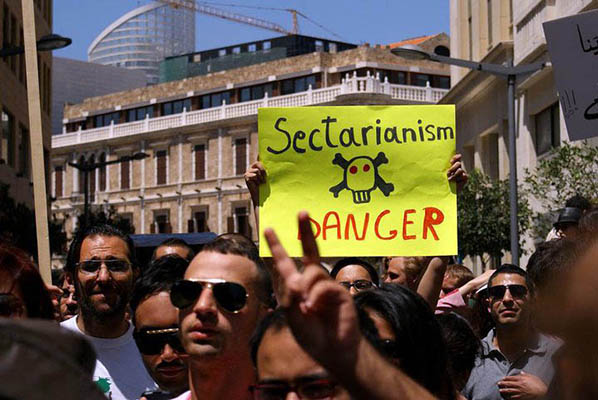
Sectarianism is defined as a “narrow-minded adherence to a particular sect (political, ethnic or religious), often leading to conflict with those of different sects or possessing different beliefs”. This is a word usually used to describe the violent religious conflict suffered by countries like Lebanon and Iraq, or indeed much closer to home, as in the conflict between Catholic and Nationalist forces and Protestant and Unionist forces in Northern Ireland in the Troubles of last century. Recently, however, this term has reared its head in the context of mainland British politics, not least following the major Green Party victory in Thursday 26 February’s Gorton and Denton by-election.
Following his defeat in the election, Reform UK candidate Matt Goodwin made a statement on X declaring: “We are losing our country. A dangerous Muslim sectarianism has emerged.” This came after Reform UK lost handily 28.7% to 40.7% to the Green Party, with the election of local plumber, Hannah Spencer, in a seat with a 29.6% Muslim population. Before results were announced, fearing an imminent Green Party victory, Reform UK, Labour and elements of the mainstream media began to voice concerns about “family voting” from a lesser-known election observer group, Democracy Volunteers, that claimed to have witnessed 32 instances of the practice – when two voters confer before voting – outlawed by the 2023 Ballot Secrecy Act. Concerns, however, were raised only after the polls had closed, while Manchester City Council, which oversaw the election, noted that no reports of such activity..
Naturally, any coercion in voting is a serious threat to the democratic process and Pickthall House supports the due investigation of any such allegations. The role of biradari or “clan” politics in Britain has indeed been observed, including by academic Dr. Patrick Nash in his book British Islam and English Law. This social system, largely present among British Pakistani communities with Mirpuri or Pashtun heritage, can be tied to other phenomena such as cousin and forced marriage and honour killings. These are all undeniable social evils, the latter two of which are already illegal, and with Pickthall House favouring the outlawing of the former as well.
Sectarian Muslim voices do exist, but on the fringe of British Muslim society. Roshan Salih, editor of the Muslim-interest news site 5Pillars stated following the by-election: “The Muslim vote won it for the Greens in Gorton and Denton. We are organising our community because our voices have never been heard by any mainstream party or media. And we will use our numbers and our collective will at the ballot box to punish those who oppress us and reward those who support us.” In further textbook sectarian rhetoric, deputy editor Dilly Hussain before the election posted on X: “Muslims of Gorton and Denton, you know what you have to do”, “Punish those who want to punish you”. Though fringe, such rhetoric is indeed harmful, and Pickthall House would advocate for all Muslim community leaders and serious political candidates to dissociate and distance themselves from such elements.
Nevertheless, the increasing application of the “sectarian” label against legitimate parliamentary candidates and their campaigns since the July 2024 general election, in the context of heightened social tensions related to Israel’s genocide in Gaza, is a demonstrably incoherent term of abuse seemingly intended to demonise British Muslims’ participation and activity in politics at any level. The first to be targeted were four Muslim independent MPs (Adnan Hussain, Ayoub Khan, Iqbal Mohamed and Shockat Adam), elected on local, pro-Palestine campaigns, with Tory peer Lord Godson stating that “too many candidates in this month’s general election have sought to ride this sectarian tiger”.
Former Home Secretary-turned-Reform UK defector, Robert Jenrick MP has been strident in his condemnation of “sectarian gangs” who supposedly influenced the results of the 2024 election, and following the election posted on X: “The wider campaign, however, should be a wake up call. South Asian men instructing women how to vote at polling stations in modern Britain. The winning party campaigning under a foreign flag and in foreign languages to exploit a foreign conflict. Depresssingly [sic.] I can only see this appalling level of sectarianism spreading because most of our political class are in denial.”
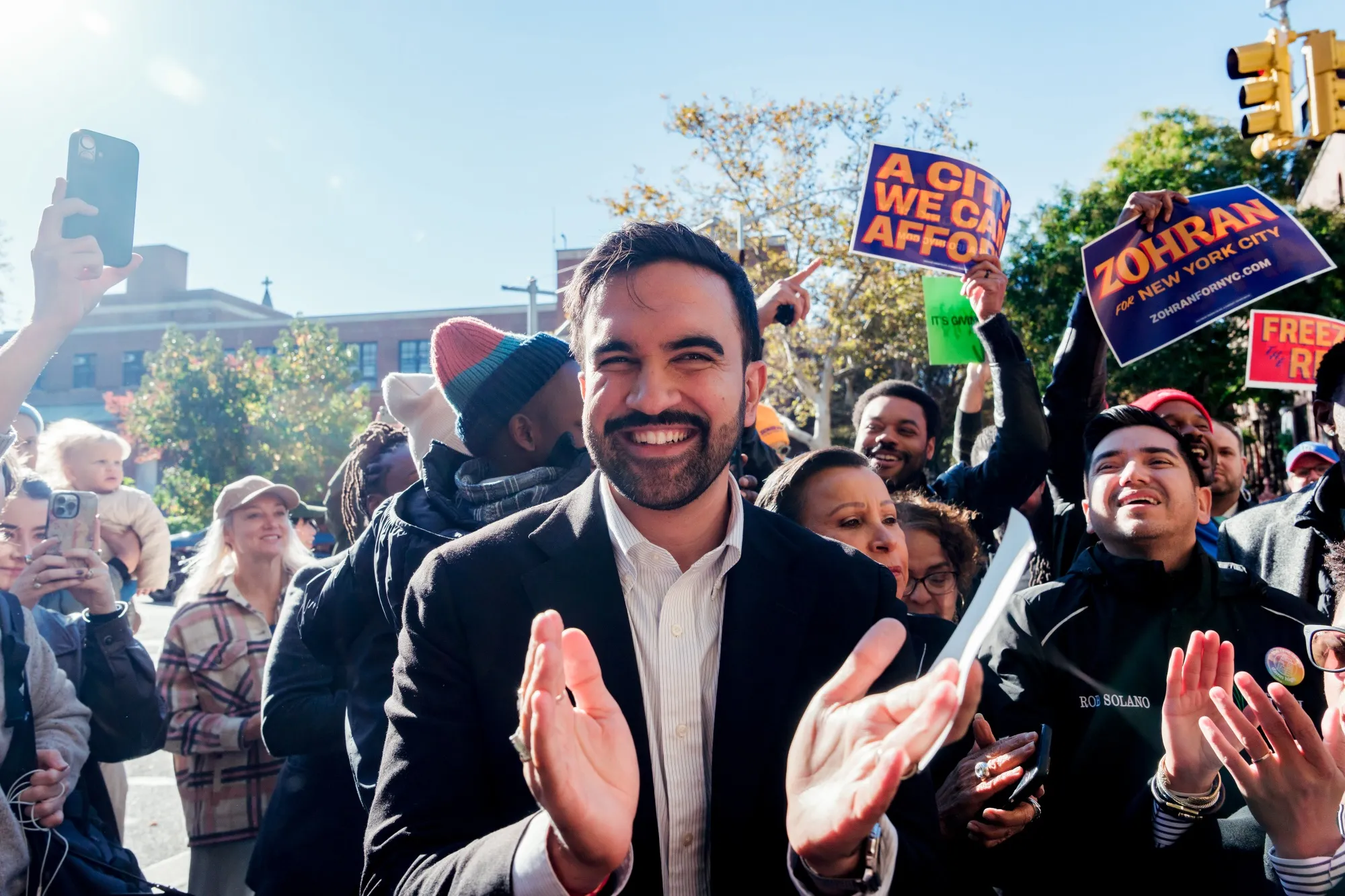
Referring to the use of the Palestinian flag, and two videos posted by the Green Party appealing to voters in Urdu and Bangla – clearly drawing on the example of Zohran Mamdani’s successful multilingual campaign videos in New York last year – Jenrick exploits the spectre of Pakistani Muslim chauvinism. The insinuation is that victory was stolen from Reform UK, as if British Pakistani women, who make up around 6% of Gorton and Denton’s population, would have voted en masse for Reform, who nonetheless lost by 12% of the vote.
All three major party leaders whose candidates lost in Thursday’s election came out on Friday 27 February to blame “sectarianism” for the Greens’ victory. Prime Minister Keir Starmer, in a letter to Labour members in Gorton and Denton stated of the Greens: “Their willingness to welcome [George] Galloway’s divisive, sectarian politics is a sign that the Greens are not the harmless environmentalists they pretend to be…”
Conservative party leader, Kemi Badenoch, who previously condemned the independent MPs “elected on the back of sectarian Islamist politics; alien ideas that have no place here”, announced on X: “Labour created the monster of harvesting Muslim community bloc votes and yesterday that monster came back to bite them. As I’ve said many times before, we are a multiracial country, not a multicultural country.”
Reform UK leader, Nigel Farage, similarly announced on X that he had written to the Electoral Commission and Greater Manchester Police to investigate the reports of “family voting”, adding: “What was witnessed yesterday is deeply concerning and raises serious questions about the integrity of the democratic process in predominantly Muslim areas.” On 1 March, noting that 10% of Gorton and Denton’s population were born in Pakistan, Farage went as far as to claim “the thousands of those who voted Green last Thursday are not actually British citizens.” Commonwealth citizens with permission to enter or stay in the UK are entitled to vote in British local and general elections, and serve in the armed forces.
To dispute the allegations of sectarianism individually would be a waste of time. Both Badenoch and Farage seem to have forgotten their parties’ own appeals to Hindu, Sikh and Jewish voters in previous elections, whereas the Labour party appears to have been content receiving the majority of the British Muslim vote until frictions arose following the party’s approach to Israel’s genocide in Gaza.
This goes without mentioning that Palestine is not a strictly British Muslim or “sectarian” issue, or that British Muslim loyalties to Labour predominantly rested on the biradari or “clan loyalty” politics mentioned previously. Indeed, footage of a dinner held by Labour at Royal Nawab in Gorton and Denton on 11 February showed a man at the top table calling on people to hold up red Labour posters, saying “This is very important. If you want to get fed, I’ve been told you have to hold one of these up.”
Any closer examination of the campaigns and politicians referred to as “sectarian” above will reveal the diversity of support and positions held, particularly with appeals to working-class voters on the issue of affordability. If many of those voters are also Muslim, one must recall that 39% of Muslims in England and Wales live in the most deprived 10% of neighbourhoods, a level of concentrated disadvantage unmatched by any other large faith community in the country. The basis of the claim of Muslim sectarianism in the UK rests on the assumption that British Muslims may not just vote primarily as Muslims, but only as Muslims, with no interest in the wider wellbeing of British society. Such a claim requires clear evidence, not just stereotypes.
Indeed, these major examples of British Muslim participation in electoral politics surely speaks to a level of integration that these same political leaders decry the absence of. Hannah Spencer, a white working-class female candidate for a party with many progressive policies typically considered at odds with Islamic orthodoxy and led by an openly gay, Jewish man, whose deputy is a visibly Muslim man of Bangladeshi heritage, has won a by-election with, in part, the support of Muslim voters: one struggles to think of a greater example of integration. For years, British Muslims have been found in all arenas of British politics, espousing a diverse range of parties, from Zia Yusuf, Reform UK’s former Chairman and recently-appointed Spokesperson for Home Affairs, to Shabana Mahmood, current Labour Home Secretary, Humza Yousaf, former SNP First Minister of Scotland, and Baroness Sayeeda Warsi, former co-chairwoman of the Conservative Party.
Moreover, there is zero credible evidence of any active Islamically-inspired or Muslim-led movement to overthrow Britain’s state democratic system. Any allegations to this effect unless proven are patently inflammatory. Indeed, aside from the various political outfits of George Galloway (a Roman Catholic) referred to by the Prime Minister above, the Independent Alliance, consisting of the four pro-Palestine MPs and former Labour leader Jeremy Corbyn (verifiably not a Muslim), is the closest example of a genuine political grouping built around “Muslim” issues. However, it is not a political party and does not campaign. Your Party, meanwhile, a socialist party, which at its foundation last year included all five independent MPs as well as former Labour MP, Zarah Sultana, has just on Thursday elected its twenty-member Central Executive Committee, of which only four members are identifiably Muslim.
Nevertheless, there is no evidence of the encouragement, approval or use of clearly sectarian rhetoric, such as that voiced by 5Pillars, by the Green Party in the Gorton and Denton by-election, nor by any other significant British political party or movement. Therefore, it should be evident that claims of “Islamism” or “Islamic sectarianism” posing a serious threat to British democracy bear no relation to the UK’s political reality. Instead, upon examination of the term’s use, it appears rather that it is being deployed as a tool against the voice of British Muslims as Muslims in politics at any level. Indeed, its use raises more questions about the extent of sectarianism in Britain, such as among elements of the right.
Sectarianism on the right
Two weeks ago, a new political party, Restore Britain, was launched on the far right of British politics by former Reform UK MP, Rupert Lowe, who declared on X: “Britain is a Christian country, and under a Restore Britain Government – it will remain a Christian country.”
Such Christian nationalism is on the rise across the right, with EDL-founder Stephen Yaxley-Lennon, alias Tommy Robinson, recently converting to evangelical Christianity in prison. Recently recruited as Senior Adviser to Nigel Farage, James Orr, Associate Professor of Philosophy of Religion at Cambridge, who describes himself as “Christian and nationalist”, is also a convert to conservative, evangelical Christianity. It is Orr who may have encouraged his friend US Vice President J.D. Vance to remark that the UK has become the first “truly Islamist country that will get a nuclear weapon” under Labour – a statement both patently untrue and deliberately sectarian and provocative.
Orr is likely also a driving force behind the announcement last Monday, 23 February, that “Reform will restore Britain’s Christian heritage” by seeking to introduce a curriculum founded on Christian values, and “prevent churches from being converted into mosques” by granting them listed status and the creation of a new building class specifically for Christian places of worship. This is despite the fact that there are only 40 confirmed conversions of churches to mosques in recent years, out of approximately 38,500 churches nationwide, i.e. only 0.1%. According to The Times, only two Church of England churches have been sold in the last half-century, both of which became gurdwaras.
Pickthall House supports freedom of religion and for faith to have a role in public life, and recognises that such deeply-rooted beliefs underpin Britain’s pluralist moral and social fabric. The question that arises is: how is such an exclusive promotion of Christianity and Christian identity within politics not in itself sectarianism, as defined at the start of this article? Moreover, one wonders, which Christianity is Britain’s heritage founded on? Anglicanism is the established religion in England, and Presbyterianism in Scotland. Wales has had no established church since 1920, and until just under two hundred years ago, Catholics could not even sit as Members of Parliament. Northern Irish politics, meanwhile, has been divided between largely Catholic and Protestant camps for a century, with serious and definitive examples of sectarian and ethnonationalist violence from the 1960s to the late 1990s.
Nevertheless, from 2017 to 2019, Theresa May’s Conservative government gladly received support, in the form of a confidence and supply agreement, from the Democratic Unionist Party, whose leader Arlene Foster’s 2017 campaign launch was marred by accusations of sectarianism after she compared the rival Irish nationalist party, Sinn Fein, to “crocodiles”, and whose founder, Ian Paisley, supported inflammatory Orange Order marches through Catholic neighbourhoods and strongly opposed the 1998 Good Friday Agreement that brought peace to Northern Ireland.
Indeed, sectarianism can be ethnic as well. Reform UK’s candidate, Matt Goodwin, in August 2024 claimed that “White Britons will become a minority by 2070”. White British and Irish people make up 76.8% of the UK’s population according to the 2021-22 censuses. In an interview with The Spectator in June last year, Goodwin then stated that, “‘Britishness’ [is] a state identity that has been imposed […] on the top [while] ‘Englishness’ [is] an ethnicity that is deeply rooted in a people that can trace their roots back over generations.” He added in November that “It takes more than a piece of paper to make somebody ‘British’”.
As campaign director for Restore Britain, Charlie Downes, claimed last week that “more than anything, it is ancestry and Christian faith” that makes someone British, it seems that a far more dangerous and genuinely ethnic and religious sectarian politics is on the rise. On one hand, British Muslims are participating within Britain’s democratic system, voting with their conscience for a range of parties, based on deeply-held beliefs. On the other hand, the same can arguably also be said of those on the right advocating for Christian nationalism and British or English ethnonationalism on the right, yet it is only they who are actively seeking to establish the ideological basis of their parties along ethnic or religious lines.
British Muslim political sympathies
Turning to the nature of British Muslims’ political beliefs, observation would suggest that at least among the majority of Britain’s Muslim population any sympathies for “Islamic” or “Islamist” politics internationally are largely premised on a general affinity for political movements with a strong practising Muslim identification and appearance.
This sympathy is enhanced by nostalgia for a personal or imagined memory of an Islamic way of life in the motherland, and strengthened by the experience of minoritisation in diaspora, which builds a transcommunal, transethnic British Muslim identity. This identity is founded on deeply held, shared and largely compatible, traditional religious and cultural values, but often remains uninformed in practice, beyond limited direct engagement with politics overseas, most notably catalysed by emotive causes such as the suffering of Muslim populations in Bosnia, Chechnya, Afghanistan, Kashmir, Rakhine, Xinjiang, etc. in recent decades.
This could be considered a latent or “soft” Islamism, or more likely it is simply the natural result of the engagement of a deeply faithful, faith-based community with their knowledge of politics overseas. Parallels could well be drawn between diasporic Sikh sympathies for activists in Indian Punjab, Hindu sympathies for civilians in Pakistan, Bangladesh, Sri Lanka and Indonesia, or most comparably widespread Christian concerns regarding persecution of their coreligionists in the Middle East, India, China and beyond. A degree of preference for traditional morality and social conservatism domestically can also be expected across faiths.
To sympathy for persecuted minorities and advocate for the alleviation of their suffering is not sectarianism. Nonetheless, Spectator editor and former Conservative minister, Michael Gove, insinuated that including a picture of Indian Prime Minister Narendra Modi with Starmer in Green Party campaign materials was a sectarian move, ignoring the fact that for a decade Modi was under British diplomatic boycott for failing to stop riots in Gujarat that left at least a thousand dead, mostly Muslims.
Since coming to power in 2014, Modi’s Hindu nationalist party, the BJP, has overseen a rise in anti-minority violence, legislation and rhetoric across India, to the detriment of Christians, Dalits, Sikhs, secularists, and Muslims among others. Relations with such a political figure clearly caused British officials serious concerns in the past – for it to be questioned by British politicians now is not a sectarian issue. Rather, it is the narrow-mindedness of ethnic, religious or political sympathies, the provocation of conflict or seeking to elevate one community and its values at the exclusion of others that crosses the line into sectarianism.
Political dynamics among the patchwork of different ethnic and national communities that make up Britain’s Muslim population are then supplemented by the presence of political exiles in diaspora. Among South Asian Muslims, these figures may stem, for example, from movements such as Jamaat-e-Islami, but also from non-Islamist parties such as Pakistani Tehreek-e-Insaf and the Bangladeshi National Party in Bangladesh (which recently returned to power after twenty years following February’s election), as well as certainly some former supporters of the Muslim Brotherhood from Egypt, and Ennahda movement from Tunisia, and so on. On the other hand, the presence of an Islamist government in Iran, results in the majority of the political exiles or refugees in Britain being constituting a strongly secular and anti-Islamist diaspora, as can be seen in recent demonstrations. One should also recall that prior to the success of the 1979 Revolution, Ayatollah Khomeini was based in Paris.
Recent claims have been put forth of “Islamist” capture of UK state institutions and universities. However, unless concrete proof of such a radicalisation initiative can be presented, any apparent British Muslim political sympathies can primarily be explained phenomenologically. Any individuals resident or in exile in the UK who are active in Islamist politics abroad should primarily be concerned with politics in their home country, where they would presumably wish to return to power. The presence in London of publications critical of Arab regimes, such as Middle East Eye and the New Arab, speaks firstly to Britain’s traditional freedom of the press and the tolerance and asylum provided to those silenced by authoritarian regimes, be they secular, Islamist, or indeed of any ideology.
Last of all, it must be mentioned that the deep stigmatisation of Britain’s Muslim population through the widespread adoption of canards such as “sectarianism” and “Islamism” in the mainstream media and political rhetoric, naturally only further entrenches any existing isolationism and disenfranchisement among British Muslims. The overbearing weight of state surveillance of the vague notion of “extremism” through the Prevent programme, with cases targeting young children or those engaging in orthodox religious practices, provides another more explicit rationale for Muslims to adopt political stances that rally explicitly around serving Muslims’ interests, as these interests are the very primary ones at threat.
Conclusion
As Pickthall House has argued before, the monitoring or proscription of “extremism” as a concept is not fit for purpose to defend democracy. Until clear proof of a group’s sedition, or any other activity intended to undermine the British state, is presented and substantiated, any attempt to limit the fundamental British values of freedom of expression and association should surely be doggedly withstood. Furthermore, if “sectarianism” as a term is to return to common use in British politics it should be clearly defined and any allegations substantiated.
Pickthall House believes in upholding and extending Britain’s proud tradition of safeguarding the freedom of the individuals and communities that comprise our society. Domestically, we aim to promote harmonious relations between Britain’s various religious and ethnic groups grounded on the principle of freedom of expression. Pickthall House strongly believes that the substance of the law should not be based on any one religion or philosophy above others, but on values common to all communities, that is to say, public reason.
Britain’s diversity is a reality and truly sectarian politics is undeniably a scourge on any liberal, democratic society. In a free society, pluralism, not consensus is the natural result of liberty. Therefore, if citizens should choose to vote with their conscience, if no evidence of coercion or disregard for the state and society as a whole can be presented, Pickthall House believes such rights should be protected.