
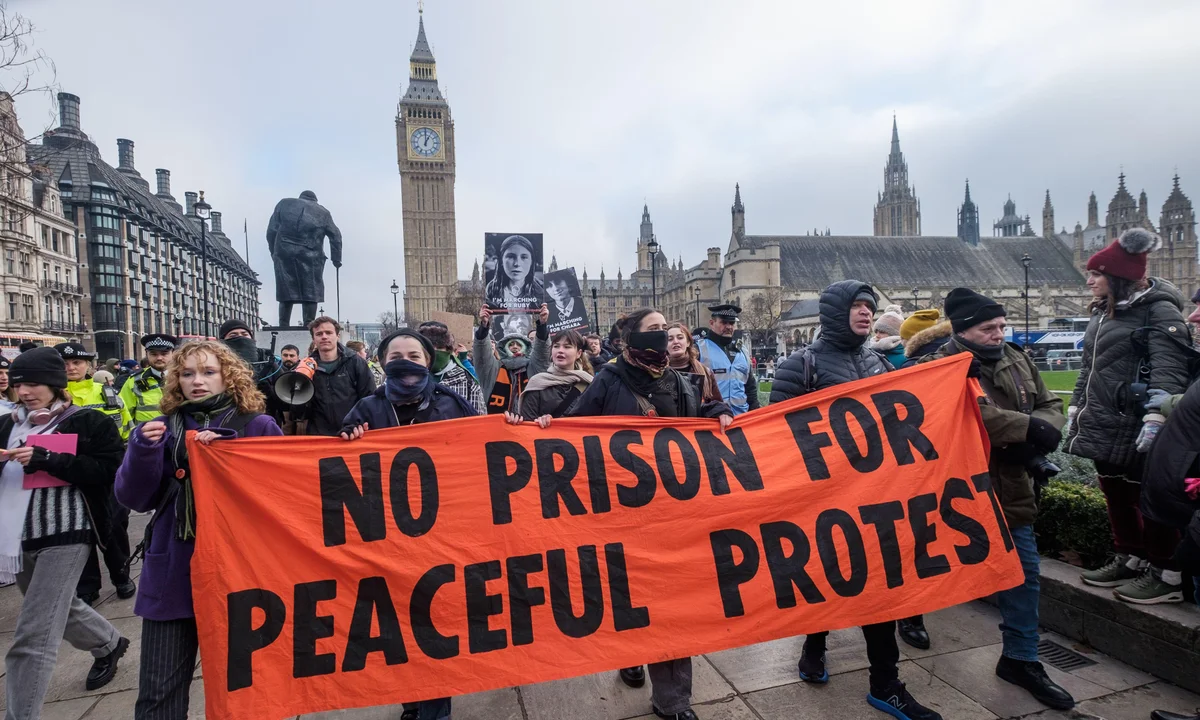
The Starmer government’s sweeping restrictions on protest rights represent a significant erosion of democratic freedoms in the United Kingdom. Home Secretary Shabana Mahmood’s announcement that police will now consider the cumulative impact of repeated demonstrations marks a shift in how the state conceptualises dissent, threatening to criminalise persistence itself rather than unlawful behaviour. As Pickthall House covered only a little over a month ago in our analysis of government restrictions on freedom of expression, this represents a continuation of a deeply worrying trend.
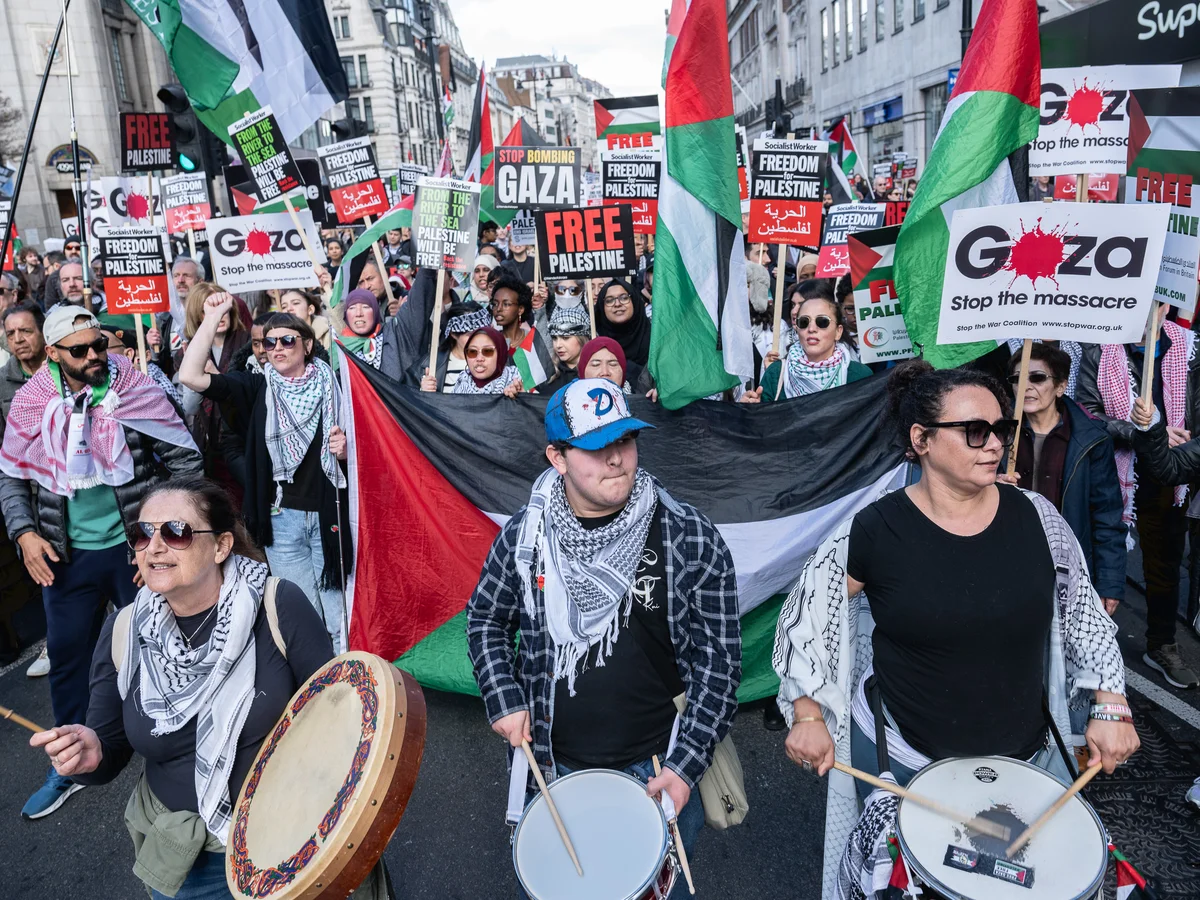
Following nearly 500 arrests at a pro-Palestinian demonstration in London on October 4th, Mahmood declared that police would be empowered to move, reschedule, or limit the size of protests based on their aggregate disruption over time. Prime Minister Keir Starmer reinforced this authoritarian turn by characterising protests marking the October 7 anniversary as “un-British.” To label peaceful protest “un-British” is historically illiterate and constitutionally dangerous. Britain’s democratic freedoms were secured precisely through the persistent exercise of disruptive protest that authorities of the day deemed illegitimate and threatening.
The 1819 Peterloo Massacre saw cavalry charge into a peaceful crowd of 60,000 to 80,000 demonstrators demanding parliamentary reform in Manchester, killing approximately 18 people and injuring hundreds. The authorities considered this gathering dangerously radical; history remembers it as a pivotal moment in Britain’s democratic evolution. The Suffragettes and suffragists, subjected to imprisonment, force-feeding, and widespread condemnation as threats to public order, secured women’s voting rights through sustained civil disobedience that polite society deemed profoundly “un-British.”
If the cumulative impact doctrine had existed at the time, both movements would have been prohibited long before achieving their objectives. The very rights Starmer’s government now invokes to justify restrictions were won by those willing to persist despite state opposition. To criminalise that persistence is to deny the foundations of British democracy itself.
A Dangerous Conflation
It must be emphasised that the pro-Palestinian protests on October 4th were pre-planned commemorations, not responses to the Manchester synagogue attack that occurred the same day. Despite claims by numerous commentators suggesting otherwise, these demonstrations had been organised well in advance and bore no connection to the attack. The government’s subsequent crackdown dangerously conflates unrelated events.
This conflation is particularly troubling given the context. The Manchester attack was a horrific act of violence that rightly provoked widespread condemnation. To use it as justification for restricting protests that had nothing to do with it represents precisely the kind of opportunistic exploitation of tragedy that counters both counterterrorism efforts and civil liberties.
The Illusion of Community Protection
Mahmood’s justification invokes community safety, claiming that “large, repeated protests can leave sections of our country, particularly religious communities, feeling unsafe, intimidated and scared to leave their homes.” This framing deliberately conflates legitimate protest with harassment, establishing a precedent whereby rights can be restricted based on the cumulative “feeling” of disruption rather than demonstrable violations of public order.
This logic mirrors left-wing cancel culture: restricting expression not because it violates the law but because it makes people uncomfortable. Whether deployed by campus activists silencing speakers or ministers restricting demonstrations, the principle is equally corrosive to free speech.
To be clear, unlawful conduct at protests (violence, harassment, incitement) should be prosecuted regardless of whether it occurs once or repeatedly, but the cumulative impact doctrine targets lawful expression, not criminal behaviour.
Moreover, this narrative presents religious communities—particularly British Jews—as monolithic in their opposition to pro-Palestinian demonstrations. This is simply false. Many British Jews do oppose such protests, and their concerns deserve respectful consideration. But many others participate in these demonstrations or support the right to protest, even when they disagree with the message. Jewish voices are regularly present at pro-Palestinian marches. Green Party leader Zack Polanski, who is Jewish and from Manchester, has strongly supported the marches and vocally opposed the government’s restrictions. Restricting protest rights because some community members feel uncomfortable with political speech is to abandon the fundamental principle that feelings of discomfort do not override constitutional freedoms.
Only last week, Pickthall House analysed Shabana Mahmood’s stated commitment to pragmatic pluralism in managing Britain’s religious and cultural diversity. The Home Secretary’s rhetoric suggested an understanding that democratic societies must accommodate competing worldviews through dialogue and institutional flexibility rather than suppression.
The “un-British” comment and the cumulative impact doctrine undo whatever good that approach promised. Pragmatic pluralism cannot coexist with the criminalisation of sustained political expression. Suppose Britain is to be a society where diverse communities can articulate and compete with one another’s visions of justice. In that case, some of those communities must be permitted to voice deeply held convictions about international conflicts, even when those convictions make others profoundly uncomfortable.
Free Speech and the Right to Protest
Pickthall House calls on the Starmer government to abandon this legislation and rethink its approach. Rather than criminalising youth activism, the government should engage seriously with the issues driving young people into the streets, including their domestic and foreign policy concerns. Britain’s youth face profound economic anxiety, with 37% citing it as their primary concern, alongside work insecurity and unaffordable housing. These are not grievances that can be managed through police power.
The violence here takes bureaucratic rather than physical form. Still, the intent remains identical to that of more obviously repressive regimes: to make dissent so costly, so exhausting, and so legally precarious that citizens abandon the effort to hold power accountable. Britain has historically condemned such measures when employed elsewhere. It cannot now adopt them without betraying the democratic principles it claims to uphold.
For now, the Starmer government has opted for coercion over engagement. Societies that criminalise youth dissent rather than addressing its root causes do not remain stable. British youth, watching movements persist globally against far greater obstacles, will not be easily silenced by bureaucratic restrictions and rhetorical delegitimisation. Attempts to suppress rather than address youth mobilisation do not end movements. Instead, they determine whether those movements retain faith in democratic institutions or conclude that power responds only to more disruptive forms of pressure.